The Importance of Developing and Following an Investment Policy
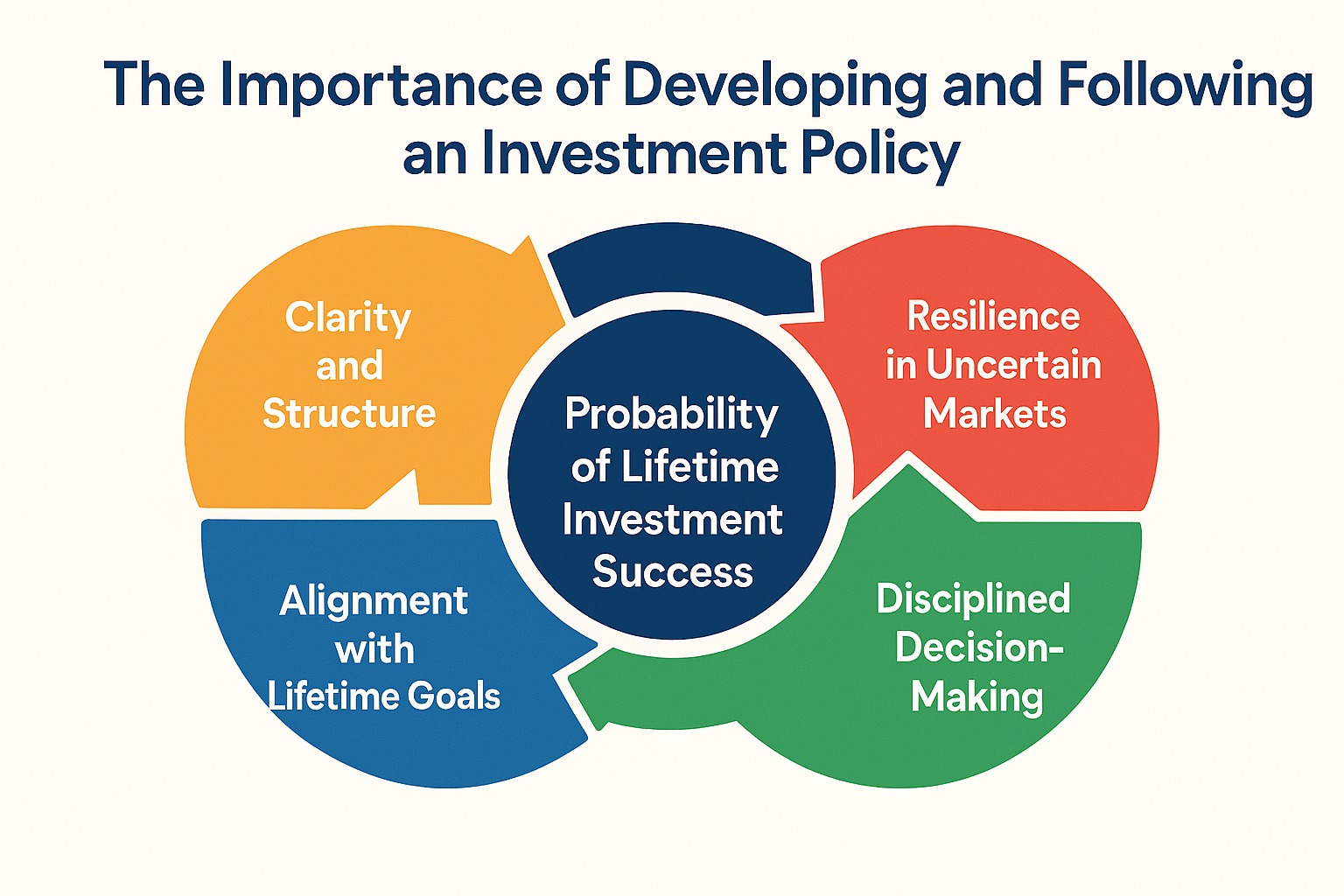
In the world of investing, uncertainty is a constant companion. Markets are shaped by the collective actions and knowledge of millions of participants, and prices adjust rapidly to new information. Against this backdrop, the development and disciplined implementation of an Investment Policy Statement (IPS) is not just a best practice—it is the foundation for long-term investment success. At its core, an IPS is designed to provide investors with a high degree of probability of achieving their lifetime financial goals.
Why Develop an Investment Policy?
1. Clarity and Structure
An investment policy formalizes the organization of investment objectives, protocols for managing the portfolio, and control procedures for monitoring performance and compliance. It sets out the purpose, background, objectives, risk tolerance, asset class preferences, time horizon, and expected returns. This clarity helps both investors and advisors maintain a shared understanding of expectations and prudent processes, especially during periods of market upheaval.
2. Resilience in Uncertain Markets
Markets are efficient and unpredictable. Attempting to outguess the market—through market timing or picking “winning” managers—often leads to disappointment and underperformance. Research shows that most mutual funds fail to outperform their benchmarks over time, and missing just a few of the market’s best days can significantly reduce returns. An IPS keeps the investment process intact during volatile periods, reducing the impulse to react emotionally or “manage through the rearview mirror.”
3. Disciplined Decision-Making
Humans are not naturally wired for disciplined investing. Emotional reactions to market news, trends, or advice from friends can lead to costly mistakes. An IPS provides a framework for making rational decisions, focusing on what can be controlled—such as asset allocation, diversification, cost management, and tax efficiency—rather than chasing performance or reacting to short-term events.
4. Alignment with Lifetime Goals
The IPS is tailored to each investor’s specific needs, goals, and limitations. It considers factors such as time horizon, lifestyle impact, capital replacement, and emotional tolerance for risk. By aligning investment strategy with these personal drivers, the IPS increases the likelihood that investors will stay the course and achieve their long-term objectives.
The Role of Disciplined Investment Management
1. Sticking to the Strategy
Disciplined investment management means selecting a strategy and sticking to it, rather than swerving in and out of the market based on short-term fluctuations or breaking news. This long-term perspective allows the power of compounding to work, as demonstrated by the example of Warren Buffet, whose fortune grew exponentially over decades. Volatility is the “price of admission” for higher returns—accepting it is essential for investment success.
2. Diversification
Diversification is a cornerstone of prudent investing. While concentration can lead to wealth in specific cases, diversification is the only “free lunch” in investing, reducing risk without sacrificing expected returns. A well-diversified portfolio is less likely to suffer catastrophic losses and more likely to deliver consistent performance over time.
3. Capturing Market Premiums
Academic research has identified several risk premiums—market, size, value, and profitability—that offer higher expected returns over the long term. By structuring portfolios to capture these premiums, investors can increase their probability of success. However, realized premiums are volatile and can sometimes be negative; discipline and patience are required to benefit from them over time.
4. Regular Monitoring and Rebalancing
Disciplined management includes regular reporting and rebalancing. Quarterly reviews and annual meetings ensure that portfolios remain aligned with target allocations and risk profiles. Rebalancing helps maintain the intended asset mix, improves performance, and manages risk. Tax optimization strategies further enhance after-tax returns.
The Core Purpose: Probability of Lifetime Investment Success
Ultimately, the reason for developing and following an investment policy with discipline is to maximize the probability of lifetime investment success. By focusing on evidence-based principles—market efficiency, diversification, risk management, and cost control—investors can avoid common pitfalls and stay on track toward their goals. The IPS serves as a roadmap, guiding investors through market cycles and emotional challenges, and providing the confidence to remain invested for the long term.
In summary:
Developing and adhering to an investment policy is not just about managing money—it is about managing behavior, expectations, and risk. It is the disciplined pursuit of a prudent process that gives investors the best chance of achieving their financial aspirations, regardless of market conditions.
*Reminder to get your quarterly Credit Report from: TransUnion https://www.transunion.com/annual-credit-report